The best common sense safety rules for kids are short, easy to remember and tied to things children actually see every day. In winter, that means snowbanks, slippery steps, space heaters, cold fingers and early darkness. Common sense for kids means noticing what is around them, pausing before acting, and asking "What could happen next?" Winter gives you a fresh reason to practise that every single day.
I was reminded of this last week watching a young neighbour climb a tall snowbank at the end of a driveway, right where the plow comes through. Nothing happened. But it was the kind of moment where one simple rule, learned ahead of time, does all the work.
What common sense safety rules should a 5-year-old know in winter?
Common sense winter safety rules for a 5-year-old should be few, simple and repeated often. Children ages 5–7 remember rules best when each one connects to something they can point at: the snowbank, the heater, the front steps. Three to five clear rules work better than a long list.
Here is a starting list you can adapt for your own family:
- Snowbanks by the road are not for playing. Plows and drivers may not see a small child on or behind a snowbank.
- Stay off the ice unless a grown-up says it's okay. Ponds, creeks and retention ponds can look solid when they are not.
- Keep a "kid-free zone" around heaters, fireplaces and woodstoves. Nothing gets placed on or near them, including mitts drying.
- Cold or wet means come inside. Children should know they are never in trouble for coming in early.
- When it's dark, be seen. Wear something bright or reflective when walking after school.
How do I teach my child common sense about winter dangers?
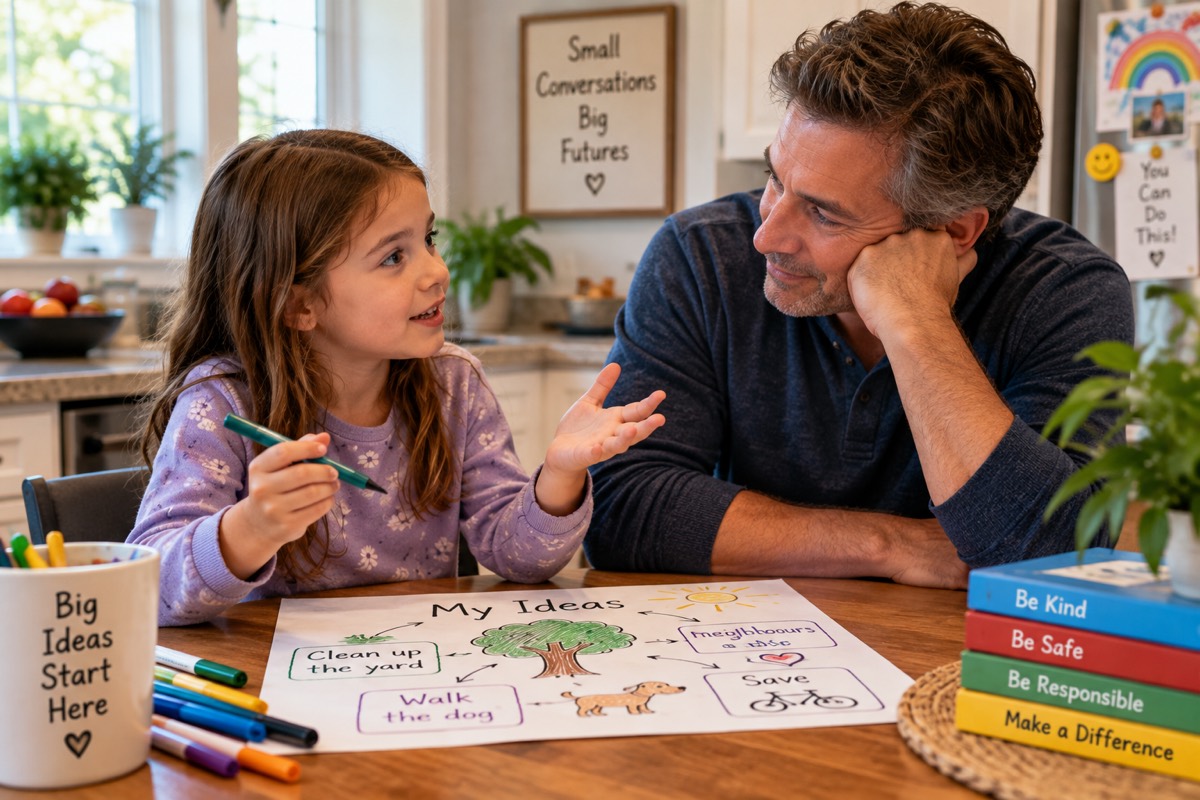
Teaching children common sense about winter dangers works best through short walks and real examples, not lectures. Point out one hazard at a time, ask your child what could go wrong, and let them suggest the safer choice. Children ages 5–10 hold on to rules they helped figure out.
A simple way to do it:
- Take a "winter safety walk" around your home, yard and street together.
- Stop at each spot (the steps, the driveway, the heater, the back door) and ask, "What do you notice here?"
- Ask "What could happen?" and let your child answer before you add anything.
- Agree on one rule for that spot, in your child's own words if possible.
- Repeat the walk after the first big snowfall, when things look different.
Over 40 years of working in and around homes, I've found that most everyday hazards aren't hidden. They're in plain sight: a cord running under a rug, a space heater too close to the curtains, an icy step nobody has salted yet. Teaching children to notice is half the job.
Indoor winter safety: building everyday life skills at home
Winter means more time indoors, and more heating. That's a natural time to build practical thinking about the home. Children ages 8–10 can start helping with simple checks, while younger ones can be "spotters" who tell an adult what they see.
- Is anything sitting too close to a heater, fireplace or woodstove?
- Are boots and wet mitts drying in a safe spot?
- Do we know where our smoke alarms are, and what they sound like?
- Does our family know two ways out of each room?
Rules about smoke and carbon monoxide alarms differ between provinces, states and municipalities in Canada and the U.S., so your local fire department is the best place to ask what applies to your home. Many departments are happy to answer questions from families.
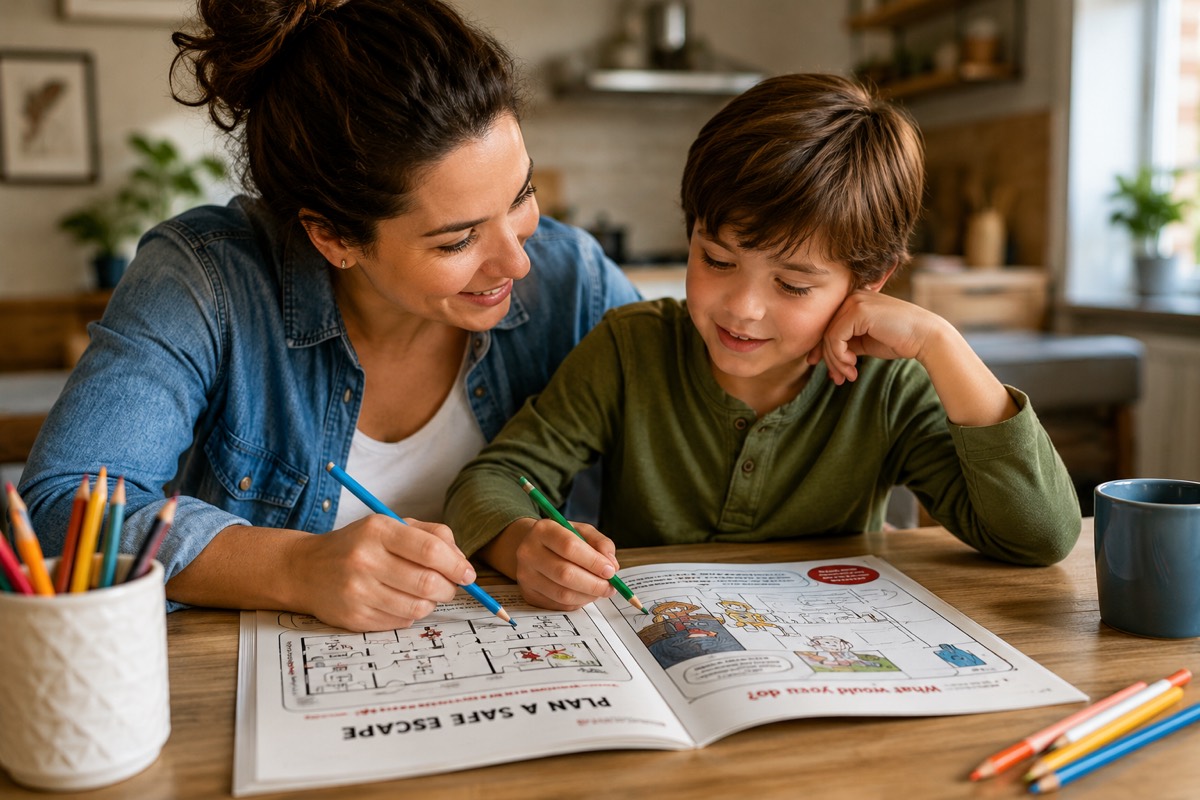
Our Home Awareness Colouring & Activity Book and Fire Safety Colouring & Activity Book (both also on Amazon.com and through local stores) were made for exactly these indoor-day conversations. A page about smoke alarms or escape plans gives a child something to colour while you talk about your own home. You'll also find free printables you can use on a snowy afternoon.
A 30-second conversation to try this week
You don't need a lesson plan. At breakfast or in the car, try one of these:
"If your ball rolled onto the frozen pond, what would you do?"
"What's one thing we should never put near the heater?"
Then just listen. If the answer is a little off, ask, "What else could you do?" before stepping in. I wrote more about why these short talks work in Teaching Kids Common Sense: Why 30-Second Conversations Can Make a Difference.
Why winter is a good season for street smarts
Winter changes familiar places. The same driveway, sidewalk and backyard suddenly have new hazards, and that change is useful. It gives children a reason to look again instead of moving on autopilot. That habit of looking again is what we mean at Common Sense Factor Kids when we talk about practical life skills: not memorizing a rule for every situation, but learning to pause, notice and choose.
Keep the rules short. Practise them outside. Praise good thinking, not just good answers. By spring, you may be surprised how often your child spots the hazard before you do.
Frequently Asked Questions
At what age can children start learning common sense safety rules?
Many children can begin learning simple safety rules around ages 3–5, starting with one or two clear rules tied to things they see every day. Between ages 5 and 10, children can usually handle more rules and start explaining why each one matters. Every child is different, so go at your child's pace.
How many safety rules should I give a young child at once?
Three to five rules at a time is a manageable number for most young children. Fewer, well-practised rules are easier to remember than a long list. Add new rules as the seasons and your child's activities change.
Should I ask the fire department about winter heating safety?
Yes, your local fire department is a good source for general heating and alarm guidance that fits your area. Requirements for smoke and carbon monoxide alarms can differ between communities in Canada and the U.S. Many departments also offer family-friendly visits, events or printed materials.
How can I tell if my child is really learning common sense?
A good sign is when your child notices a hazard or suggests a safer choice without being prompted. Asking "What would you do if…?" questions from time to time helps you see their thinking. Praise the reasoning as much as the right answer.