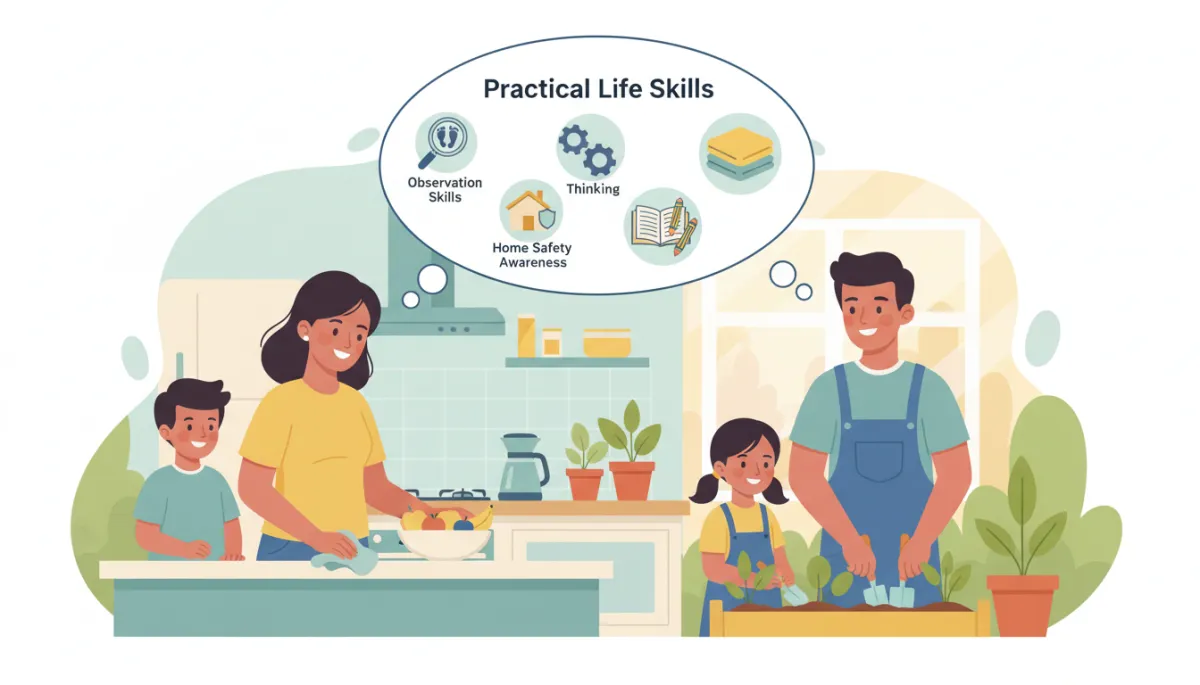
Why Kids Need Practical Life Skills Today
Parenting, Practical Life Skills, Child Development
Why Practical Life Skills for Kids Matter More Than Ever
Every day, children are surrounded by opportunities to learn practical life skills. Whether they’re asking why a furnace has a filter, noticing a dripping tap, helping prepare a meal, or learning where water goes when it disappears down a drain, these everyday moments can become valuable learning experiences. Practical life skills help children build confidence, curiosity, observation, and problem-solving skills that will serve them throughout life.
Beyond the Classroom: Why Life Skills for Children Matter
Traditional education focuses heavily on academics, and of course reading, writing, and maths are essential. But as parents and guardians, we see a bigger picture every day at home. We know that life skills for children—from tying shoelaces to reading a bus timetable — are just as important for their future success and happiness as any exam result.
Teaching everyday life skills for kids alongside school learning helps bridge the gap between theory and reality.
Research in child development has consistently shown that children build confidence, independence, and problem-solving skills when they are encouraged to participate in age-appropriate everyday activities. These practical experiences help connect learning with real-life situations and reinforce skills they can use every day.
When children learn how to pour their own drink, pack a school bag, follow a simple recipe, or notice a potential hazard at home, they begin to understand how the world works. This kind of practical learning for children is hands-on, memorable and deeply empowering.
That’s the idea behind Home Awareness—helping children better understand the home they live in through observation, curiosity, colouring activities, and family conversations.
Confidence Starts with Small, Everyday Tasks
Think about the first time your child managed a task completely on their own – fastening a coat, making their bed, or paying at a shop counter. That spark in their eyes is what confidence building activities for kids are all about. Each new skill tells a child, “You can do this. You are capable.”
Practical life skills for kids break big, scary ideas like “growing up” into manageable steps. When we invite children to help sort laundry, water plants or plan a simple meal, we show them that they are trusted members of the household. This sense of belonging feeds self-esteem and encourages them to take on new challenges in other areas, including schoolwork and friendships.
💡 Pro Tip: Start with one small task your child can succeed at today – such as matching socks or setting out cutlery – and celebrate their effort more than the outcome.
Practical Life Skills Start with Conversations
Some of the most valuable life lessons don’t begin with a lesson plan—they begin with a simple question.
Children are naturally curious. They might ask:
Why does the toilet keep running?
Where does the water go after it goes down the drain?
Why do we change the furnace filter?
What does the smoke alarm do?
Why shouldn’t we touch certain bottles under the sink?
Rather than simply giving the answer, these moments become opportunities for conversation. Parents, grandparents, caregivers, and educators can use everyday questions to encourage children to observe, think critically, and build confidence.
Each generation brings unique experiences and perspectives, giving children the opportunity to learn practical life skills through shared stories, everyday experiences, and meaningful conversations.
The goal isn’t to teach children how to repair household systems or perform maintenance. Instead, it’s about helping them become more aware of the home they live in, recognize everyday features, ask thoughtful questions, and develop confidence through observation and conversation.
These conversations also create meaningful connections between generations, allowing adults to share their experiences while encouraging children to become active participants in their own learning.
At Common Sense Factor Kids™, we believe practical life skills are built one conversation at a time. Every question is an opportunity to learn, every observation is a chance to grow, and every shared experience helps build the confidence children will carry with them into the future.
Curiosity and Observation: Skills for a Changing World
Our children are growing up in a fast-moving, unpredictable world. They need more than memorised facts; they need strong observation skills for kids and the ability to ask good questions. Everyday tasks at home are a perfect training ground for this.
When we encourage home awareness for children, we invite them to notice things adults often overlook: “Where does the water go when we pull the plug?”, “Why do we keep cleaning products up high?”, “What happens if we leave a light on all day?” These conversations develop critical thinking for children in a natural, relaxed way. They learn to link cause and effect, consider safety, and think about the impact of their choices on the family and the environment.
Home Safety and Awareness: Quietly Powerful Life Lessons
One area where practical life skills for kids are absolutely vital is safety. Home safety awareness for kids doesn’t have to be frightening. Instead, it can be woven gently into everyday routines as part of wider home awareness for children.
Simple habits – like checking that the oven is off, learning which bottles are “for grown-ups only”, or understanding why we don’t run on wet floors – help children feel prepared rather than scared. These are the kinds of life skills for children that may never appear on a school report, yet they protect our kids every single day. As they learn to spot risks and make safe choices, their sense of responsibility and maturity grows too.
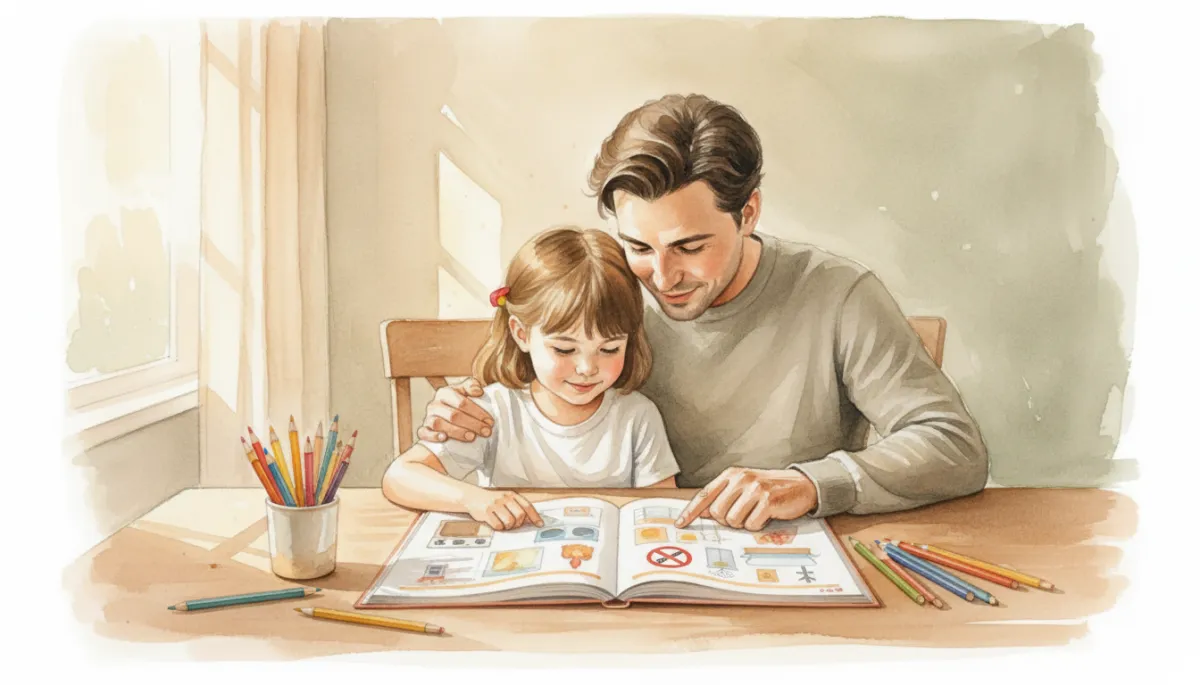
Shared colouring turns home safety lessons into relaxed family bonding time.
Screen-Free Learning Activities the Whole Family Can Enjoy
Many of us are looking for screen-free learning activities that still feel fun and engaging. The good news is that everyday life is full of opportunities for family learning activities that build real-world skills. Cooking together becomes a maths, science and safety lesson all in one. Sorting recycling turns into a discussion about materials, the planet and community responsibility. Even a simple walk around the house with a “spot the hazard” checklist can sharpen observation skills for kids and spark thoughtful conversations.
For quieter moments, educational colouring books and children's activity books are powerful tools. The best educational colouring books go beyond pretty pictures; they invite children to think about what they see. A page showing a kitchen, for example, might ask children to colour only the safe objects they can touch, or to circle anything that looks dangerous. This gently reinforces home safety awareness for kids and encourages critical thinking for children without feeling like a test.
How Educational Colouring and Activity Books Support Practical Learning
We often think of colouring as “just for fun”, but well-designed children's activity books can be a rich source of practical learning for children. When a child colours a scene of a bedroom and is prompted to find the smoke alarm, tidy the clothes, or spot something out of place, they are practising real everyday life skills for kids in a low-pressure way.
These kinds of children's activity books also strengthen fine motor skills, patience and concentration. Many parents find that activity pages which ask children to match, sort, or spot differences are excellent for building observation skills for kids and critical thinking for children. The child is not only colouring; they are scanning, comparing, predicting and making decisions – all skills that carry over into schoolwork and everyday problem-solving.
💡 Pro Tip: Keep a small basket of educational colouring books, puzzles and simple life skills for children worksheets within easy reach, so kids can choose screen-free activities independently.
Everyday Routines as Powerful Confidence Building Activities for Kids
The beauty of practical life skills for kids is that they don’t require special equipment or complicated planning. Our daily routines are full of ready-made confidence building activities for kids if we slow down enough to involve them. Getting dressed, packing a bag, making a snack, feeding a pet, or wiping a small spill are all opportunities for life skills for children to grow naturally.
One helpful mindset shift is to see children as “apprentices” in family life. Rather than doing everything for them in the name of speed or convenience, we can guide them step by step. This approach turns ordinary chores into meaningful family learning activities and reinforces the idea that everyone contributes to the household. Over time, kids realise they can rely on themselves – and that feeling is priceless.
Balancing School Learning with Real-World Skills
None of this means that academic learning is less important. Instead, it’s about balance. When life skills for children sit alongside reading, writing and maths, our kids gain a more rounded education. They see how numbers help them measure ingredients, how reading helps them follow instructions, and how science explains everyday phenomena around the home. Practical tasks give school subjects a purpose they can feel and see.
Some families even like to create simple “home projects” inspired by children's activity books or educational colouring books. A colouring page about cleaning might lead to making a safe cleaning spray with water and vinegar. A puzzle about food groups could turn into planning a balanced lunchbox. These projects reinforce practical learning for children while keeping things playful and achievable.
A Gentle Invitation to Parents and Guardians
As parents and carers, we’re all doing our best with the time, energy and resources we have. Teaching everyday life skills for kids doesn’t mean creating a perfect schedule or turning your home into a classroom. It’s about noticing small moments and inviting children in: “Would you like to help?”, “What do you think we should do next?”, “What do you notice here?”
Every shared task, thoughtful question, and everyday observation is an opportunity to help children build confidence, curiosity, and practical life skills. These same opportunities can also be encouraged through schools, libraries, youth programs, and community organizations that value practical, everyday learning. Whether learning through family conversations, everyday experiences, or educational activities, these small moments can have a lasting impact.
At Common Sense Factor Kids™, we believe practical life skills are built one conversation, one observation, and one everyday experience at a time. Our goal isn’t to teach children how to repair a home—it’s to help them understand the world around them, starting with the home they live in. By encouraging curiosity, awareness, and meaningful conversations, we’re helping children develop the confidence to ask questions, think critically, and continue learning throughout their lives.
The Common Sense Factor Kids™ Home Awareness Colouring & Activity Book was created to support these everyday conversations through engaging colouring pages, activities, and discussion prompts that encourage children to observe, ask questions, and build confidence one experience at a time.
Frequently Asked Questions
What are practical life skills for kids?
Practical life skills are the everyday abilities that help children become more confident, independent, and aware of the world around them. These skills include things like problem-solving, observation, communication, organization, responsibility, and understanding how everyday environments—such as the home—work.
Rather than focusing on repairing or maintaining household systems, practical life skills encourage children to ask questions, recognize familiar features, and build confidence through everyday experiences.
At what age should children begin learning practical life skills?
Children begin learning practical life skills from a very young age through observation and participation. As early as preschool, they can help with simple tasks like putting toys away, matching socks, watering plants, or setting the table. As they grow, these experiences can expand into age-appropriate activities that encourage curiosity, responsibility, and critical thinking. The goal is to build confidence one small step at a time.
How can parents teach practical life skills at home?
Parents and caregivers can teach practical life skills by involving children in everyday routines and encouraging them to ask questions. Cooking together, organizing a room, identifying household items, discussing home safety, or simply talking about how things work around the home can become valuable learning opportunities. These shared experiences help children connect what they learn with the world around them while creating meaningful family conversations.
Why is home awareness important for children?
Home awareness helps children become more familiar with the environment they experience every day. By learning to recognize everyday features, understand simple household systems, and identify safe and unsafe situations, children develop observation skills, critical thinking, and confidence. Home awareness isn’t about teaching children how to repair things—it’s about helping them better understand their surroundings and make thoughtful, informed decisions as they grow.
What makes educational colouring books effective learning tools?
Educational colouring books combine creativity with guided learning. When thoughtfully designed, they encourage children to observe details, solve simple problems, answer questions, and engage in conversations with parents, grandparents, educators, or caregivers. Colouring and activity books can reinforce practical life skills in an enjoyable, low-pressure way, helping children build confidence while making learning fun and memorable.