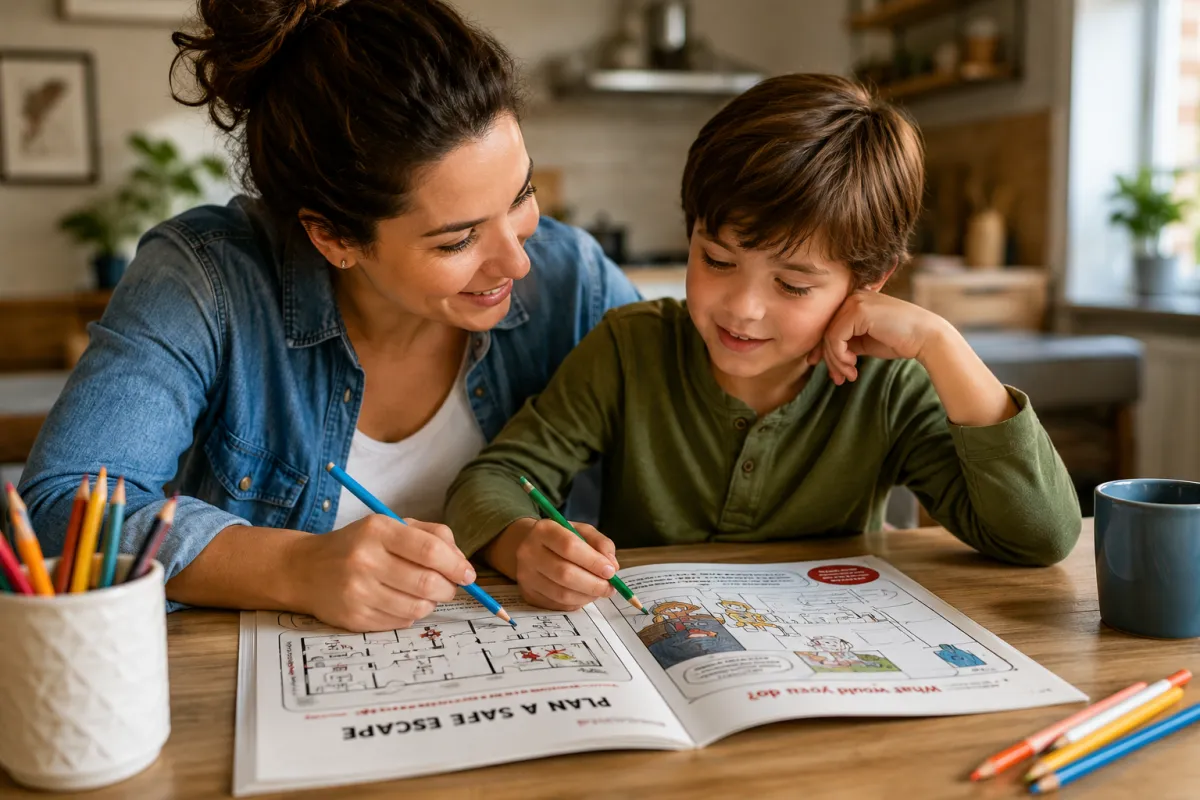
Back to School Is a Transition for the Whole Family
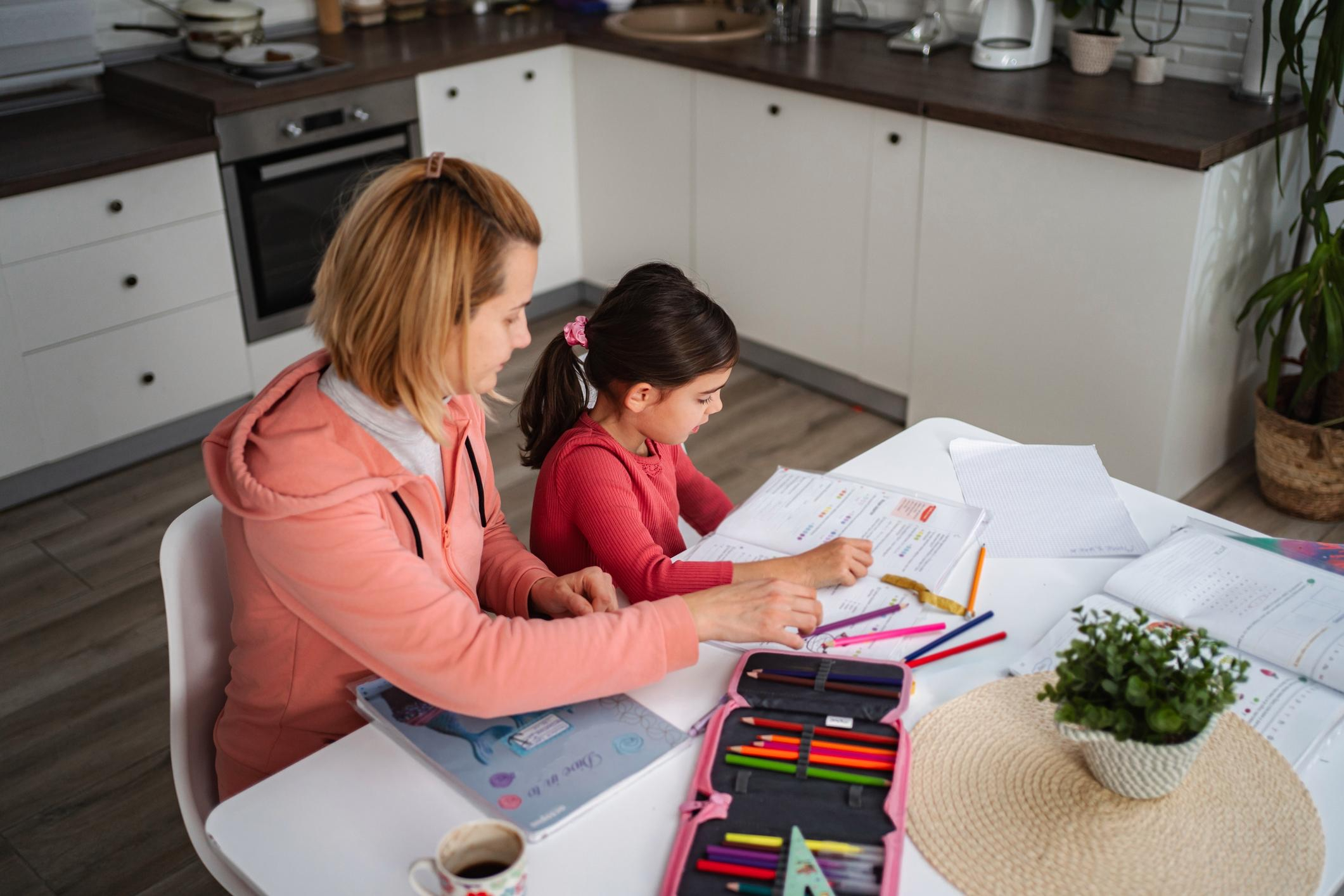
Why a simple activity at home can help children get back into learning while helping parents learn more about their child
Summer has its own rhythm.
Bedtimes may get a little later. Mornings become less structured. Vacations, visits, outdoor activities and days without an alarm clock replace much of the routine children experience during the school year.
Then September arrives.
Suddenly there are lunches to pack, backpacks to remember, earlier bedtimes, classrooms, schedules, homework and expectations.
For many children, that’s a big transition.
And perhaps we shouldn’t expect them to make it overnight.
Going Back to School Means More Than Going Back to Class
Returning to school isn’t simply a change in location.
Children are moving from one routine into another.
They may have a new teacher, a different classroom, different classmates and new expectations. Younger children may be experiencing some of these changes for the first time.
Research into school transitions has found that these periods can affect children’s academic, behavioural and social-emotional adjustment. Support from families is one of the factors that can help children navigate the change.
That doesn’t mean parents need to turn the kitchen table into another classroom.
In fact, sometimes the simplest approach is better.
Bring Learning Back Into Everyday Life
A few minutes spent doing an activity together can help reintroduce the idea of sitting down, thinking, asking questions and completing something.
It might be:
reading a story together
colouring or drawing
solving a puzzle
doing a simple household activity
talking about fire safety
learning what to do in an emergency
planning a family escape route
discussing something your child noticed during the day
The activity itself matters.
But something else is happening at the same time.
You’re having a conversation.
And that conversation may teach you something too.
Your Child Isn’t the Only One Learning
Adults often think of education as information flowing in one direction.
Adult teaches. Child learns.
Real life isn’t always like that.
Sit beside a child and ask a few open questions and you may be surprised by what comes back.
“What do you think?”
“What would you do?”
“Why did you choose that?”
“Have you ever seen this before?”
Suddenly you’re learning how your child thinks.
You may discover what they already understand, what they’re unsure about, what interests them or what they see completely differently than you expected.
A colouring page can become a conversation.
A safety activity can reveal a question your child has never asked.
A story can lead to a discussion about something that happened at school.
The worksheet may eventually end up in the recycling bin.
The conversation is what can stay with them.
Routine Helps Too
Children generally benefit from knowing what to expect.
Research examining family routines during the transition to kindergarten found associations between stronger routines and children’s academic, behavioural and social-emotional outcomes.
That doesn’t mean every minute of September needs to be scheduled.
It can be much simpler.
Dinner.
Bath.
Twenty minutes together.
A story.
Bed.
Predictability can help make a changing world feel a little more manageable.
And when you’re rebuilding routines after summer, a short family learning activity can fit naturally into that process.
Don’t Make Home Another School
This part matters.
Children already spend a significant portion of their day being instructed, evaluated and expected to perform.
Home learning doesn’t always need another grade attached to it.
Sometimes the best question isn’t:
“Did you get the right answer?”
It might be:
“How did you figure that out?”
That small change moves the conversation from performance to curiosity.
You aren’t testing your child.
You’re discovering how they think.
Sometimes You Just Need Something to Break the Ice
Starting a conversation with a child isn’t always as simple as asking, “How was school?”
The answer might be one word:
“Good.”
That’s where having an activity in front of you can help.
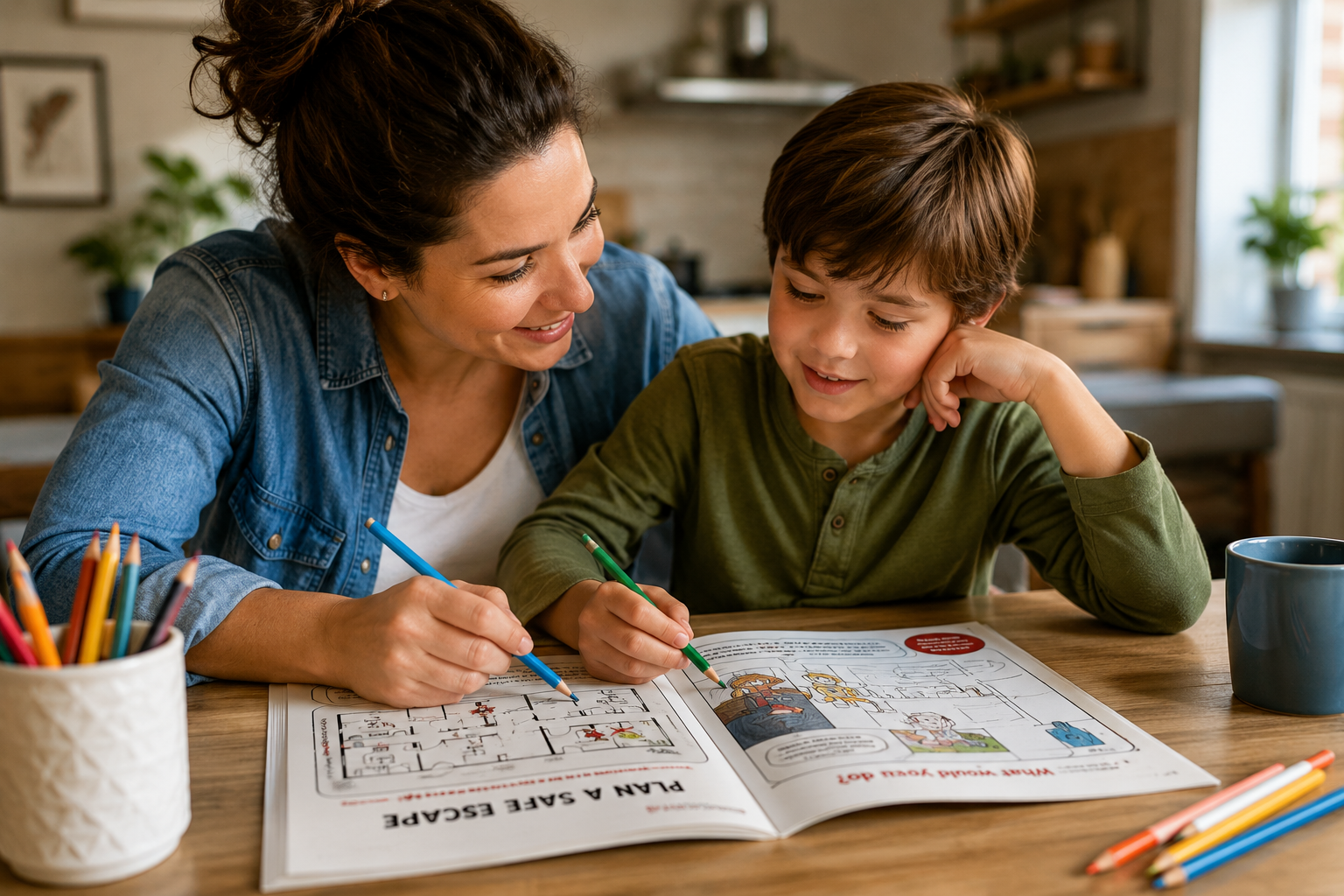
A colouring page, puzzle or simple life-skills activity gives you something to focus on together. Instead of sitting across from your child asking questions, you’re sitting beside them doing something.
That is one of the ideas behind the Common Sense Factor Kids Colouring & Activity Books.
The activities are designed to help children ages 5–10 explore practical life skills and everyday awareness while giving parents, grandparents and caregivers opportunities to join the conversation.
You don’t have to make it feel like homework.
Choose an activity. Sit down together. Let your child colour, think and explore. Ask a question when it feels natural.
“What do you think you would do?”
“Why did you choose that?”
“Have you ever seen something like this?”
And then listen.
The activity may help your child learn something useful.
But their answers may help you learn something important about them.
Sometimes the activity isn’t the lesson. It’s simply what gets the conversation started.

September Gives Families an Opportunity
The start of a new school year will always bring some adjustment.
Some children will run through the school doors.
Others may need more time.
Most will probably experience a little of both.
Parents don’t have to recreate the classroom at home to support that transition.
Sit together.
Read something.
Colour something.
Build something.
Solve something.
Talk about something that matters.
Ask a question and listen to the answer.
Because sometimes the most valuable part of learning together isn’t what your child learns from you.
It’s what you learn about your child.
And when those conversations happen regularly, education can become something bigger than schoolwork.
It becomes connection.
The Common Sense Factor
Learning doesn’t have to stop when the school day ends, and connection doesn’t have to stop when learning begins.
Sometimes one simple activity and one good conversation are enough to accomplish both.


